Tim Nebel – Biography
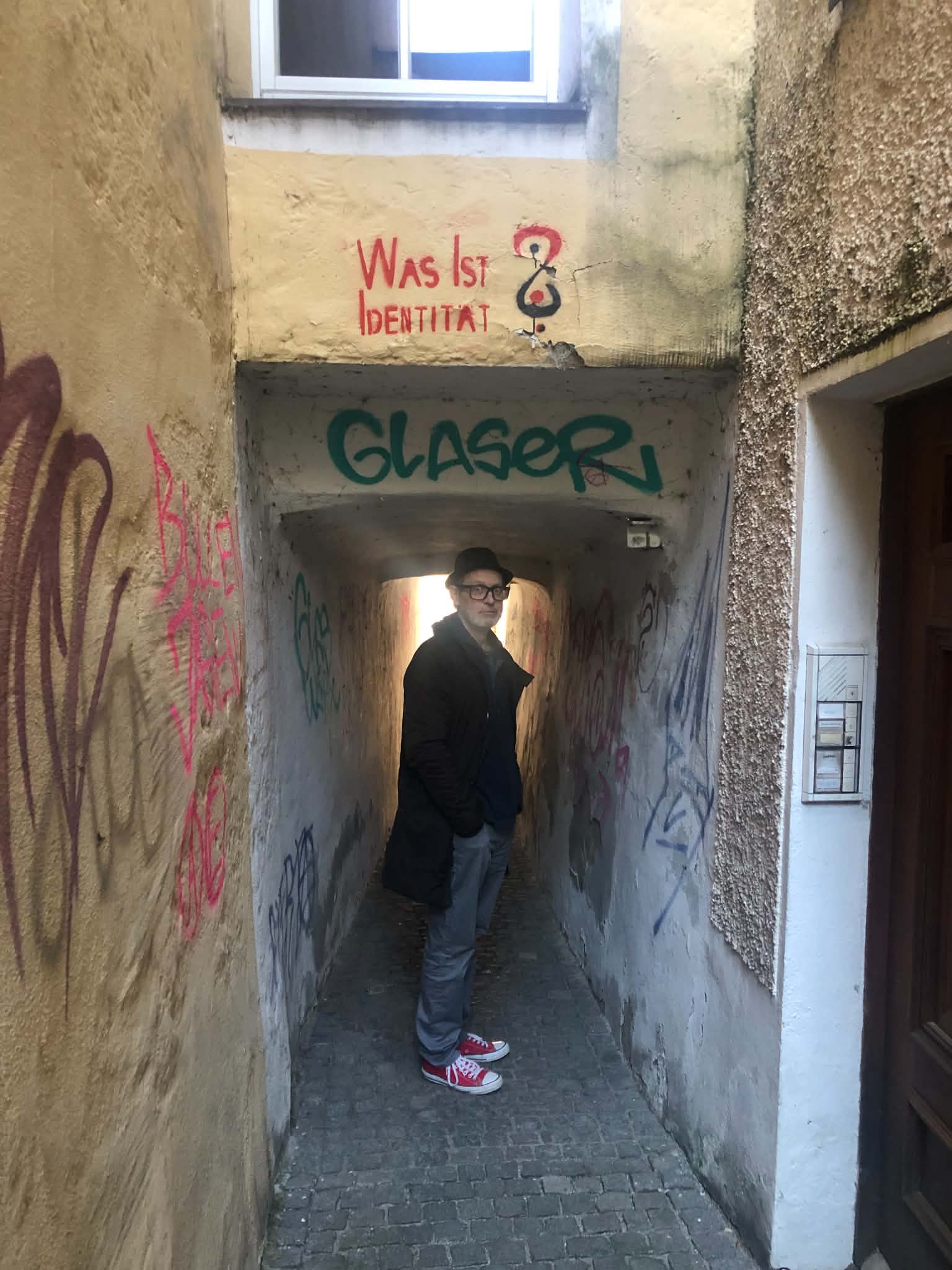
About
I was born in Hamburg in 1971 and grew up in Passau. My work moves between collage, assemblage, object art, mechanical sculpture, installation, experimental printmaking, and programmed, generative pieces. However different the media and techniques look, they share one principle for me: the tension between construction and improvisation, control and chance.
The starting point is often material that already exists. Since childhood I have collected objects, technical parts and everyday things at flea markets, from bulky waste and other finds, because of their shape, function, history or apparent uselessness. Added to that is a large stock of images and text from magazines, from about 1950 to the present.
Since I set up my first workshop in Passau’s Innstadt in 1999, this material has become objects, collages, display cases, mechanical constructions and installations. Discarded household appliances and technical fragments lose their original function and become parts of new connections. Motors set objects in motion, switches and electronics trigger events, lights change a room or turn found objects into small stages. The origin of the materials usually stays visible. I do not try to hide it. Combination, reinterpretation and misuse make it readable in a new way.
Improvisation is essential to this process. A work does not always begin with a finished idea. Often it grows out of the material at hand and the possibilities that appear while I am working. I set up conditions, respond to accidents, and decide which of them become part of the piece. Humour, absurdity, nostalgia and an affinity for technology shape many of these works.
In the display cases I compress found objects, figures, pictures, light and technical elements into small scenarios. They do not tell finished stories. They produce situations and hints. Familiar things appear in changed contexts, somewhere between the everyday, the peculiar, the melancholy and the absurd.
Alongside that I work intensively with collage and with pieces on a flat surface. Images and text from magazines of recent decades are cut out, taken apart, layered and combined with other materials. The original context of a motif dissolves. New neighbours create other meanings and visual narratives.
In current picture works I extend this collage practice with different print and image-transfer methods. Printed motifs are moved onto new supports and joined with acrylic, print and collage. I am not interested in reproducing a source as perfectly as possible. Gaps, abrasion, shifts, overlaps and traces of the transfer stay visible on purpose. The source image changes in the process and is partly left to the properties of the material and its uncertainties.
Another group is my programmed and generative work. As a programmer I build my own software systems in which I define image material, rules, movements and possible changes, without fixing the concrete result completely. Programs choose images, recombine them, alter what is shown, or produce ongoing visual sequences. Inside a frame I have set, a work can develop differently each time it runs.
Chance, analogue or digital, is not an end in itself. What interests me is controlled chance. I set the material, the rules and the limits, and with that I open a space in which the unforeseen is allowed to happen. In an image transfer that might be a gap or an unexpected overlap, in a mechanical work a movement that cannot be fully calculated, in a programmed work a combination produced by the algorithm.
This principle connects the different parts of my work. Whether it is an object, a magazine picture, printing ink, a mechanical part or program code, I work with existing material and defined systems, intervene, rearrange, and still leave room for results that cannot be planned completely. The finished work comes out of the exchange between decision and a dynamic of its own.
My professional background as a programmer and system administrator is a productive counterweight to this practice. Technical systems are usually built for repeatable processes and unambiguous functions. In the art I often use them for the opposite: to make uselessness, variation and unpredictability possible. Technology is not only a tool for me. It is also artistic material.
Since 1999 I have shown the work in solo and group exhibitions. I live and work in Passau.